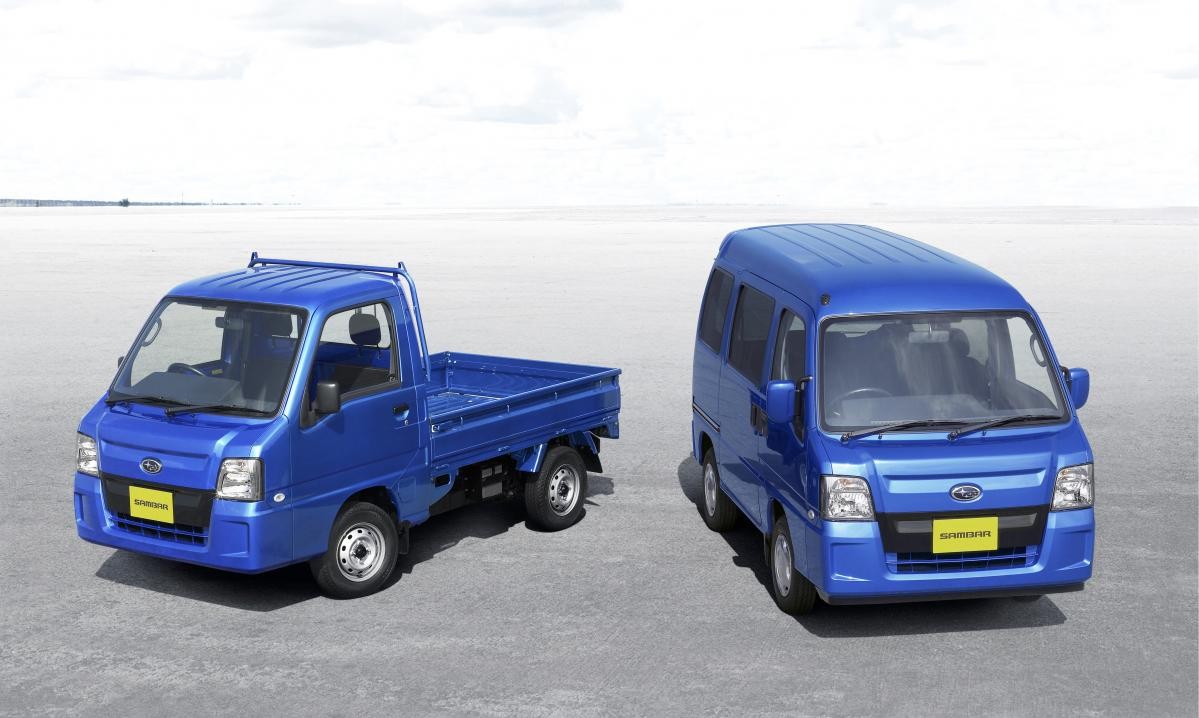
「FF車のハンドリングの歴史」から「サンバー独自の挙動」、そしてその走りを磨く「足回りチューニング」までを一つにまとめました。
物理法則と戦ってきたFF車と、物理法則を味方につけつつも特有の癖を持つサンバー。それぞれのメカニズムの違いを解説します。
- 1. FF車の戦い:トルクステアの変遷
- 2. サンバーの特権:トルクステア知らずのRRレイアウト
- 3. サンバーの課題:フロントの「浮き」と「ロール」
- 4. 解決策:スタビライザー強化とブッシュ交換
- まとめ:FFとサンバーの比較
- 1. The Battle of FWD: The Evolution of Torque Steer
- 2. Sambar’s Privilege: RR Layout Free from Torque Steer
- 3. Sambar’s Challenges: Front “Lift” and “Roll”
- 4. Solutions: Stabilizer Reinforcement & Bushing Replacement
- Summary: Comparison of FWD and Sambar
1. FF車の戦い:トルクステアの変遷
FF(フロントエンジン・前輪駆動)にとって、トルクステアは「駆動力の左右差」との戦いの歴史でした。
2. サンバーの特権:トルクステア知らずのRRレイアウト
一方で、サンバー(特に4WDスーパーチャージャーモデル)は、FF車が苦労した問題を生まれつき解決しています。
決定的な違い:「舵」と「駆動」の分離
FF車の最大の悩みは「ハンドルを切るタイヤ」が「地面を蹴るタイヤ」でもあることでした。
しかし、RRベースのサンバーは違います。
💡 サンバーの物理的メリット
基本的に「後ろのタイヤが地面を蹴り、前のタイヤは舵を取るだけ」。役割が分担されているため、強烈な加速をしてもハンドルが左右に暴れることは物理的にありません。
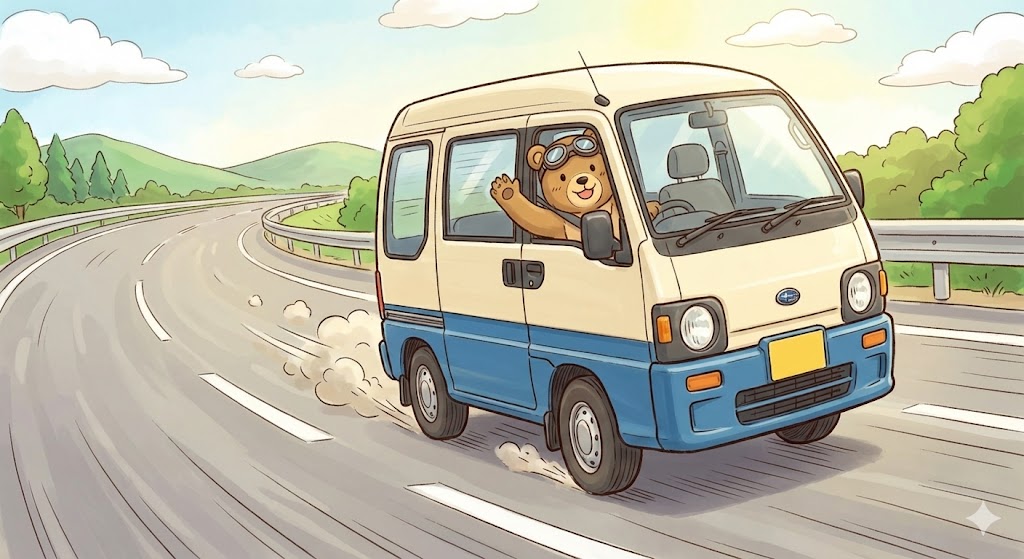
さらに、エンジンがリアタイヤの真上にあるため、アクセルを踏むと重心が後ろに移動し、強烈に路面を噛みます。これが「農道のポルシェ」と呼ばれるトラクション性能の正体です。
3. サンバーの課題:フロントの「浮き」と「ロール」
トルクステアはありませんが、サンバー特有のネガティブな挙動があります。
- プッシュアンダー(浮き):
加速でお尻が沈む分、テコの原理でフロントが浮き上がります。ハンドルがフワフワと軽くなり、接地感が薄れます。 - ロール(横揺れ):
重心が高いため、コーナーで車体が外側に大きく傾きます。
4. 解決策:スタビライザー強化とブッシュ交換
この「フワフワ感」と「グラグラ感」を解消し、サンバーをシャキッとさせるのが以下のメニューです。
A. フロントスタビライザーの強化(または流用)
左右のサスペンションを繋ぐバネ(スタビライザー)を強化することで、「乗り心地(縦の動き)」を悪化させずに「ロール(横の動き)」だけを抑え込みます。
- 効果:カーブでの車体の傾きが減り、内側のタイヤが路面から離れにくくなります。
- 流用テクニック:ワゴン(ディアス)用の太いスタビライザーをバン(TV系)に流用するのは定番の強化策です。
B. ブッシュ類の交換(強化ウレタンや新品ゴム)
スタビライザーやロアアームを支えるゴム部品(ブッシュ)のリフレッシュです。
- スタビリンクブッシュ:ここを新品やウレタン製などの硬いものに変えると、ハンドルを切った瞬間の「遊び」が消え、スッと車体が反応するようになります。
- ロアアームブッシュ:加速でフロントが浮き気味になっても、タイヤが勝手にふらつくのを防ぎます。
まとめ:FFとサンバーの比較
| 項目 | ハイパワーFF車 | サンバー (RR/4WD) |
|---|---|---|
| 加速時のハンドル | 左右に強引に持っていかれる | フワッと軽くなる |
| 原因 | ドライブシャフト等の左右差 | 加速による前輪荷重の減少 |
| 対策の方向性 | 構造進化と電子制御で抑制 | スタビ・ブッシュで姿勢制御 |
サンバーにおける足回り強化は、単なる改造ではなく、「後ろが重くて前が軽い」というバランスを整え、ドライバーの安心感を作るための機能的なアップデートと言えます。
※なぜ今になってトルクステアなんて言い出したかというと、サンバーの車検の代車の某メーカーの某車、交差点左折中に思いっきりトルクステアがでて、今の車でこんなことあるのか?とおどろいたからです。
From the “History of FWD Handling” to the “Unique Behavior of the Sambar,” and finally the “Suspension Tuning” to refine that ride, here is a summary of the entire flow.
We explain the mechanical differences between FWD vehicles, which have fought against physical laws, and the Sambar, which uses physics to its advantage but has its own unique quirks.
1. The Battle of FWD: The Evolution of Torque Steer
For FWD (Front-Engine, Front-Wheel Drive) vehicles, torque steer has been a history of fighting against the “left-right disparity in driving force.”
2. Sambar’s Privilege: RR Layout Free from Torque Steer
On the other hand, the Sambar (especially the 4WD Supercharger model) inherently solves the problems that FWD cars struggled with.
The Decisive Difference: Separation of “Steering” and “Driving”
The biggest headache for FWD cars was that the “tires turning the car” were also the “tires kicking the ground.”
However, the RR-based Sambar is different.
💡 Sambar’s Physical Merit
Basically, “the rear tires kick the ground, and the front tires just steer.” Since the roles are divided, the steering wheel does not physically thrash left and right even under intense acceleration.
Furthermore, since the engine sits directly above the rear tires, accelerating shifts the center of gravity backward, biting into the road intensely. This is the true identity of the traction performance that earned it the nickname “The Porsche of the Farm Roads.”
3. Sambar’s Challenges: Front “Lift” and “Roll”
While there is no torque steer, there are negative behaviors unique to the Sambar.
- Push Under (Lift):
As the rear squats during acceleration, the leverage causes the front to lift.The steering feels floaty and light, reducing the sense of road contact. - Body Roll:
Due to the high center of gravity, the vehicle tilts significantly toward the outside during corners.
4. Solutions: Stabilizer Reinforcement & Bushing Replacement
The menu to resolve this “floaty” and “wobbly” feeling and make the Sambar feel sharp is as follows:
A. Front Stabilizer Reinforcement (or Swap)
By reinforcing the spring connecting the left and right suspensions (Stabilizer Bar), you can suppress “Roll (lateral movement)” without worsening “Ride Comfort (vertical movement).”
- Effect: Reduces body tilt in curves and keeps the inner tire from lifting off the road.
- Swap Technique: A standard upgrade is to swap the thicker stabilizer bar from the Wagon (Dias) model onto the Van (TV series).
B. Bushing Replacement (Urethane or New Rubber)
Refreshing the rubber parts (bushings) that support the stabilizer and lower arms.
- Stabilizer Link Bushings: Changing these to new ones or harder urethane eliminates the “play” when turning the wheel, making the car react instantly.
- Lower Arm Bushings: Prevents the tires from wandering on their own even if the front lifts slightly during acceleration.
Summary: Comparison of FWD and Sambar
| Item | High-Power FWD | Sambar (RR/4WD) |
|---|---|---|
| Steering on Acceleration | Forcibly pulled left or right | Becomes floaty and light |
| Cause | Left/Right drive shaft disparity | Reduced front load due to acceleration |
| Direction of Solution | Structural evolution & Electronic control | Stabilizer & Bushings for posture control |
Suspension reinforcement in the Sambar is not just a modification, but a functional update to correct the “Rear-Heavy, Front-Light” balance and create peace of mind for the driver.
コメント