
高速コーナーでの車体安定性:アクセルはオンかオフか?
高速コーナーにおける車両の安定性は、駆動方式によって劇的に変わります。一概に「オンが良い」「オフが良い」とは断言できませんが、物理特性に基づいたセオリーは存在します。
ここでの「安定」は「スピンなどの急激な挙動変化が起きにくく、コントロールを維持しやすい状態」と定義します。
1. FF(フロントエンジン・フロントドライブ)
特性:フロントヘビー。前輪が駆動と操舵を兼ねる。
- アクセルオン:安定方向(曲がらない)
前輪荷重が抜け、アンダーステア(外に膨らむ)が強まる。曲がらないがスピンリスクは低く、挙動は安定。 - アクセルオフ:不安定方向(向きは変わる)
前荷重になり曲がるようになるが、高速域では後輪荷重が抜けて急激にリアが出る「タックイン(オーバーステア)」が発生しやすい。
💡 結論:緩やかなオンが安定
基本は前輪で車体を引っ張るイメージ(トラクションステア)で走るのが最も安定します。
2. FR(フロントエンジン・リアドライブ)
特性:重量バランスが良い。操舵と駆動が分離している。
- アクセルオン:安定方向(限界内なら)
後輪に荷重が乗りグリップが増す。適切なパワーならリアが落ち着き安定する。踏みすぎればパワースライドへ。 - アクセルオフ:不安定方向
回頭性は良くなるが、後輪の接地感が薄れるため、高速コーナーでは不安定(オーバーステア誘発)になりやすい。
💡 結論:緩やかなオンが安定
後輪に適度な駆動力をかけ続け、リアタイヤを路面に押し付けておくことが安定の鍵です。
3. MR(ミッドシップ・リアドライブ)
特性:回頭性が抜群に良い。限界は高いが超えるとピーキー。
- アクセルオン:絶対的な安定条件
加速時は強力なリアトラクションが得られる。踏んでいる間は後輪が強く路面を捉え、非常に安定する。 - アクセルオフ:非常に危険(不安定)
背中の重量物により、アクセルオフでの前荷重移動が急激。高速での不用意なオフはスピンに直結する。
💡 結論:「オン維持」が必須
コーナー中はパーシャルまたは緩やかな加速状態で、常にリアタイヤに仕事をさせ続ける必要があります。
4. RR(リアエンジン・リアドライブ)
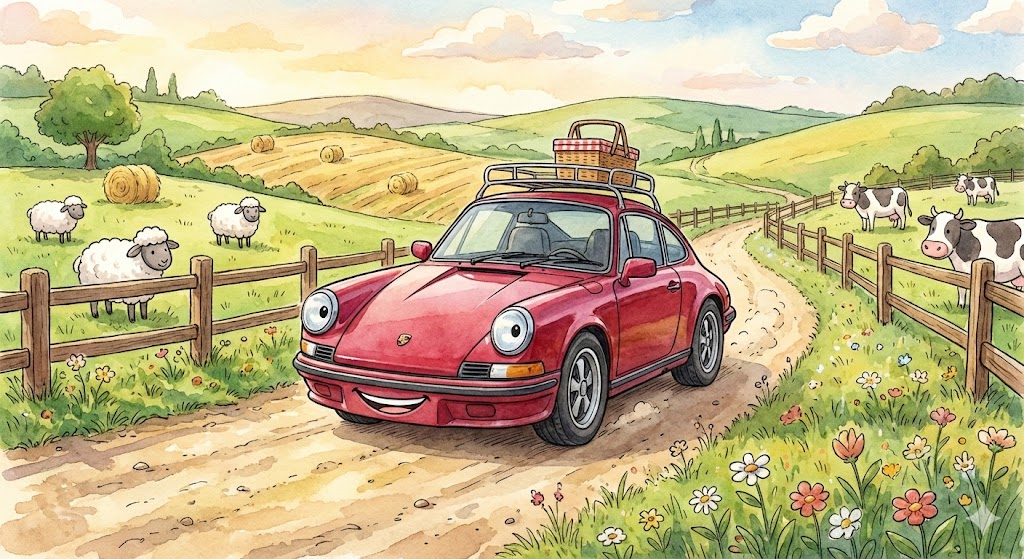
特性:極端なリアヘビー(ポルシェ911等)。強烈なトラクション。
- アクセルオン:最も安定する状態
加速で重心がさらに後ろへ移動し、重いエンジンがリアタイヤを路面に押し付ける。戦車のような安定感。 - アクセルオフ:非常に危険(自殺行為)
車体後端の重いエンジンが強い遠心力を持っている。ここで荷重を抜くと、強烈な振り子スピンが発生する。
💡 結論:「オン維持」が生命線
「怖いからアクセルを抜く」という本能的な動作が、RRでは最も危険な結果を招きます。
まとめ:安定性比較テーブル
| 駆動方式 | 安定する操作(基本) | 不安定になる操作(危険) | 傾向 |
|---|---|---|---|
| FF | 緩やかなオン (アンダーで安定) |
急なオフ (タックイン誘発) |
前で引っ張って安定させる |
| FR | 緩やかなオン (リア接地感確保) |
急なオフ (リア荷重抜け) |
アクセルでバランスを取る |
| MR | オン維持が必須 (トラクション確保) |
オフは厳禁 (急激なスピン) |
リア荷重依存度が高い |
| RR | オン維持が生命線 (最強の安定感) |
オフは自殺行為 (振り子スピン) |
アクセルでリアを押し付ける |
最終結論
高速コーナーでは、どの駆動方式であっても「パーシャル(速度維持)から緩やかなアクセルオン」でタイヤに駆動力をかけ続けている状態が、物理的には最も車両が安定します。
特にエンジンが後ろにあるMRとRRにおいては、アクセルオンは「加速」のためではなく、「車体を安定させる」ための必須操作となります。
新時代の駆動方式:電動化が変えたコーナリング
モーター駆動の介入は、これまでの機械式エンジン車(FF/FR/MR/RR)の常識を覆しました。物理的な不利を「超高速制御」で打ち消してしまう、新しい時代のコーナリング特性を解説します。
1. 電動4WD(フロントエンジン+リアモーター)
トヨタE-Fourや日産e-4ORCE(の一部)など、前輪と後輪が機械的につながっていないタイプです。最大の特徴は、リアモーターが0.001秒単位の超高速レスポンスで独立制御される点です。
結論:ドライバーがオン/オフを意識せずとも、システムが勝手に「FFの弱点を消して理想的な姿勢」を作ってくれるため、誰が乗っても速く安全に走れます。
2. ピュアEV(電気自動車/BEV)
テスラやポルシェタイカンなど、完全に電気のみで走る車です。これはエンジン車とは物理的な構造が根本的に異なります。
💡 決定的な2つの特徴
1. 床下にバッテリーを敷き詰めた「異次元の低重心」(起き上がりこぼしのような安定感)
2. 油圧ブレーキより圧倒的に速く緻密な「回生ブレーキ制御」
- アクセル「オン」(圧倒的な安定感):
低重心のため車体がグラつかず、オン・ザ・レール(レールの上を走るよう)な感覚で曲がっていきます。緻密なトルク制御により、スリップの兆候すら感じさせません。 - アクセル「オフ」(最大の武器):
エンジン車では危険な操作でしたが、EVでは強力な安定制御スイッチになります。タイヤ個別に回生ブレーキ力を調整する人間業ではない制御により、路面に吸い付くように減速しながら安定姿勢を維持します。
まとめ:全駆動方式のセオリー比較
| 駆動方式 | 高速コーナーのセオリー・特性 | 主なリスク |
|---|---|---|
| FF | アクセルONで引っ張る。 曲がらないが安定。 |
急なオフでのタックイン |
| FR | アクセルでバランスを取る。 操る楽しさがある。 |
パワー過多のスライド オフでのリア荷重抜け |
| MR/RR | アクセルON維持が生命線。 リア荷重依存が極めて高い。 |
アクセルオフ厳禁 (コマのように回る) |
| 電動4WD (HV等) |
制御が助けてくれる。 アンダーを消して曲げてくれる。 |
システムを過信した オーバースピード |
| ピュアEV (BEV) |
異次元の低重心+緻密制御。 オン/オフ問わず超安定。 |
物理的な重量オーバー (限界を超えると止まらない) |
エンジン車(特にMR/RR)は人間が物理法則に合わせて操作する必要がありますが、最新の電動車は物理的な不利をモーターが打ち消してくれるため、ラフな操作でも車が安全・快適に速く走らせてくれるという違いがあります。
2026年現在、様々な駆動方式が乗れます!あなたはどの駆動方式が好きですか?下部のメールで教えてください!
High-Speed Corner Stability: Throttle On or Off?
Vehicle stability in high-speed corners changes dramatically depending on the drivetrain layout. While we cannot simply say “On is better” or “Off is better,” there are theories based on physical characteristics.
Here, “stable” is defined as “a state where sudden behavioral changes (like spinning) are unlikely, and the driver can easily maintain control.”
1. FWD (Front-Engine, Front-Wheel Drive)
Characteristics: Nose-heavy. Front wheels handle both driving and steering.
- Throttle ON: Stable Direction (Does not turn well)
Accelerating unloads the front wheels, increasing understeer (pushing wide). It doesn’t turn well, but spin risk is low, making the behavior stable. - Throttle OFF: Unstable Direction (Turns better)
Load shifts to the front, improving turn-in. However, at high speeds, lifting off can cause a sudden loss of rear grip, leading to “lift-off oversteer” (tuck-in).
💡 Conclusion: Gentle ON is Stable
Basically, driving with the image of pulling the car body with the front wheels (traction steer) is the most stable approach.
2. RWD (Front-Engine, Rear-Wheel Drive / FR)
Characteristics: Good weight balance. Steering and driving are separated.
- Throttle ON: Stable Direction (Within limits)
Acceleration loads the rear wheels, increasing grip. With appropriate power, the rear settles and stabilizes. Too much power leads to a power slide. - Throttle OFF: Unstable Direction
Turn-in improves, but rear contact feeling diminishes. This easily leads to instability (oversteer) in high-speed corners.
💡 Conclusion: Gentle ON is Stable
Applying moderate driving force to keep the rear tires pressed against the road is key to stability.
3. MR (Mid-Engine, Rear-Wheel Drive)
Characteristics: Excellent turn-in ability. Limits are high, but behavior is peaky once exceeded.
- Throttle ON: Absolute Condition for Stability
Strong rear traction is gained during acceleration. As long as you are on the throttle, the rear wheels grip firmly, making it very stable. - Throttle OFF: Very Dangerous (Unstable)
Due to the heavy weight behind the driver, forward load shift upon lift-off is sudden. Careless lift-off at high speed leads directly to a spin.
💡 Conclusion: “Maintaining ON” is Essential
Throughout the corner, you must keep the rear tires working by maintaining partial or gentle acceleration.
4. RR (Rear-Engine, Rear-Wheel Drive)
Characteristics: Extremely tail-heavy (e.g., Porsche 911). Intense traction.
- Throttle ON: The Most Stable State
Acceleration shifts the center of gravity further back, pressing the heavy engine onto the rear tires. Creates tank-like stability. - Throttle OFF: Very Dangerous (Suicidal)
The heavy engine at the very rear has strong centrifugal force. Lifting off here causes a violent pendulum spin due to sudden rear load loss.
💡 Conclusion: “Maintaining ON” is a Lifeline
The instinctive action of “lifting off because the corner is scary” invites the most dangerous consequence in an RR.
Summary Table: Stability Comparison
| Drivetrain | Stable Operation (Basic) | Unstable Operation (Dangerous) | Tendency |
|---|---|---|---|
| FWD (FF) | Gentle ON (Stable understeer) |
Sudden OFF (Induces lift-off oversteer) |
Stabilize by pulling from the front. |
| RWD (FR) | Gentle ON (Ensures rear contact) |
Sudden OFF (Rear load loss) |
Balance controlled by throttle. |
| MR | Must Maintain ON (Ensures traction) |
OFF is Strictly Prohibited (Sudden spin) |
High dependence on rear load. |
| RR | Maintaining ON is a Lifeline (Strongest stability) |
OFF is Suicidal (Pendulum spin) |
Press rear down with throttle. |
Final Conclusion
In high-speed corners, regardless of the drivetrain, physically the vehicle is most stable when maintaining traction on the tires with “partial (speed maintenance) to gentle throttle ON.”
Especially for MR and RR layouts where the engine is in the back, throttle ON is not just for “acceleration,” but an essential operation to “stabilize the vehicle body.”
New Era Drivetrains: How Electrification Changed Cornering
The intervention of motor drive has overturned the conventional wisdom of mechanical engine vehicles (FWD/RWD/MR/RR). We explain the cornering characteristics of this new era, where physical disadvantages are canceled out by “ultra-high-speed control.”
1. Electric 4WD (Front Engine + Rear Motor)
Vehicles like the Toyota E-Four and Nissan e-4ORCE (specific models) feature no mechanical connection between front and rear wheels. The key feature is the rear motor’s independent control with 0.001-second ultra-high-speed response.
Conclusion: Without the driver consciously managing throttle on/off, the system automatically “erases FWD weaknesses and creates ideal posture,” allowing anyone to drive fast and safely.
2. Pure EV (Battery Electric Vehicle / BEV)
Cars running entirely on electricity, like Tesla or Porsche Taycan. Their physical structure is fundamentally different from engine vehicles.
💡 Two Decisive Features
1. “Otherworldly Low Center of Gravity” due to batteries lining the floor (stability like a roly-poly toy).
2. “Regenerative Braking Control” overwhelmingly faster and more precise than hydraulic brakes.
- Throttle ON (Overwhelming Stability):
Due to the low center of gravity, body roll is minimal, giving an “on-the-rails” cornering sensation. Precise torque control prevents even a hint of slippage. - Throttle OFF (The Greatest Weapon):
A dangerous action in engine cars, lift-off becomes a powerful stability control switch in EVs. Superhuman control adjusting regenerative braking force on individual tires maintains stable posture while decelerating as if glued to the road.
Summary: Drivetrain Theory Comparison
| Drivetrain | High-Speed Corner Theory & Traits | Main Risks |
|---|---|---|
| FWD (FF) | Pull with Throttle ON. Stable but doesn’t turn well. |
Lift-off oversteer upon sudden OFF. |
| RWD (FR) | Balance with throttle. Fun to manipulate. |
Powerslide from too much power. Rear load loss on OFF. |
| MR/RR | Maintaining ON is vital. Extremely dependent on rear load. |
Throttle OFF strictly prohibited. (Spins like a top) |
| Electric 4WD (HV etc.) |
Control assists you. Eliminates understeer to help turn. |
Overspeeding due to overreliance on the system. |
| Pure EV (BEV) |
Low CG + Precise Control. Ultra-stable whether ON or OFF. |
Physical weight overload. (Hard to stop once limits exceeded) |
While engine vehicles (especially MR/RR) require the human to operate in accordance with physical laws, modern electric vehicles use motors to negate physical disadvantages, allowing the car to be driven quickly, safely, and comfortably even with rough inputs.
As of 2026, we have many drivetrain options. Which is your favorite? Please let us know by email below!
コメント