ギボシ端子の法則はある?+端子の雄雌の使い分け
結論(基本ルール)
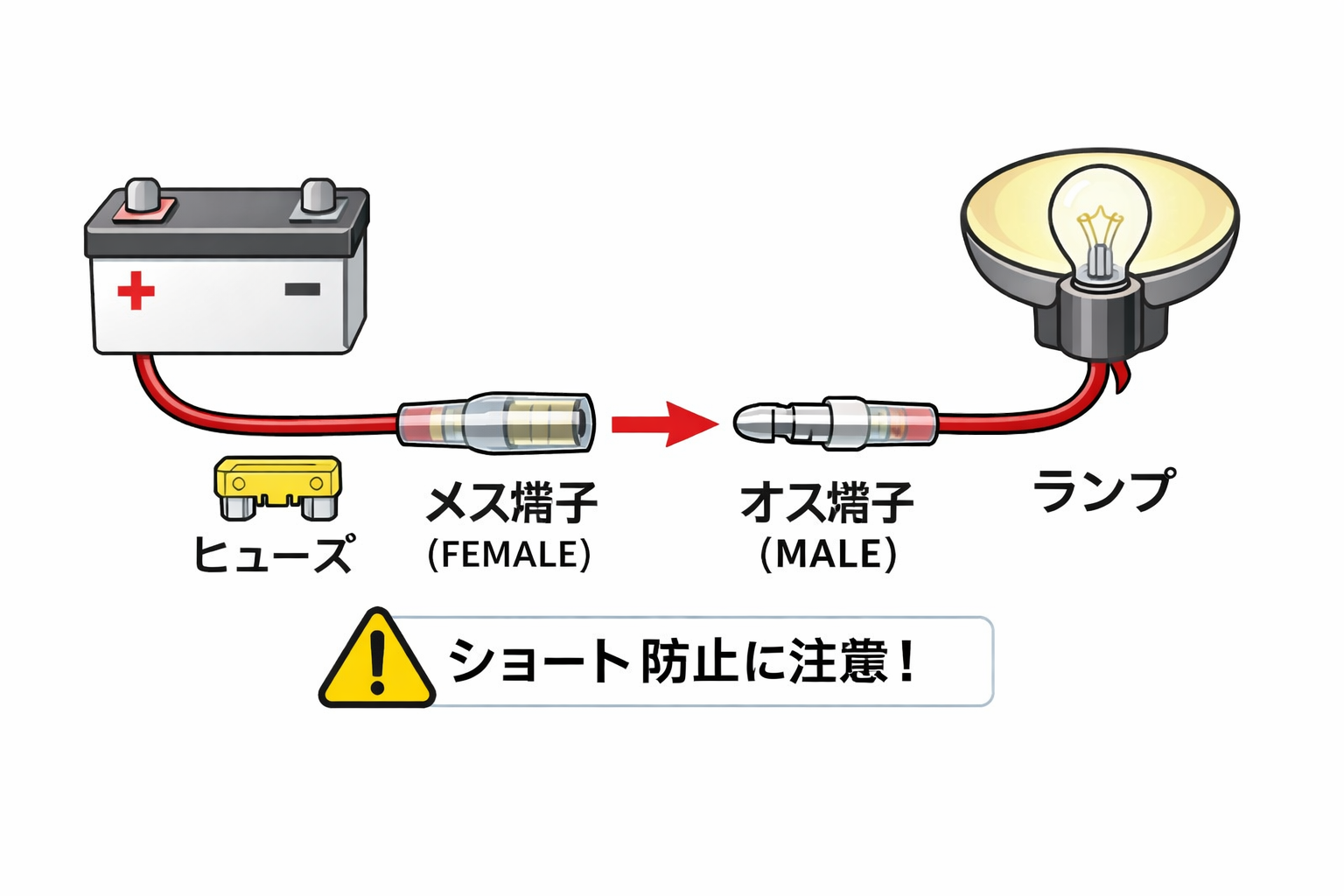
電源(+)側には「メス端子」
受け側(機器側)には「オス端子」
これは自動車・バイク配線での安全上の基本ルールです。
なぜ電源側は「メス端子」なのか?
オス端子は金属部分が露出しています。
そのため電源側がオス端子だと、外れた瞬間に車体金属(ボディ・フレーム)に触れてショートする危険があります。
メス端子は金属部分が内部に隠れているため、
誤って触れてもショートしにくく、安全性が高くなります。
マイナス(−)側の考え方
マイナス側も基本的な考え方は同じですが、
車体アースの場合は厳密に守られていないこともあります。
迷った場合は
「+側を必ずメス端子」
を優先すると安全です。
よくある配線例
- バッテリー+ → メス端子
- ACC電源 → メス端子
- ヒューズ後電源 → メス端子
- 機器・ランプ側 → オス端子
覚え方(ひとことで)
「電気が来るほうはメス端子」
【English Version】Bullet Connector Polarity Rule
Is there a rule for bullet connectors?
Basic rule (important)
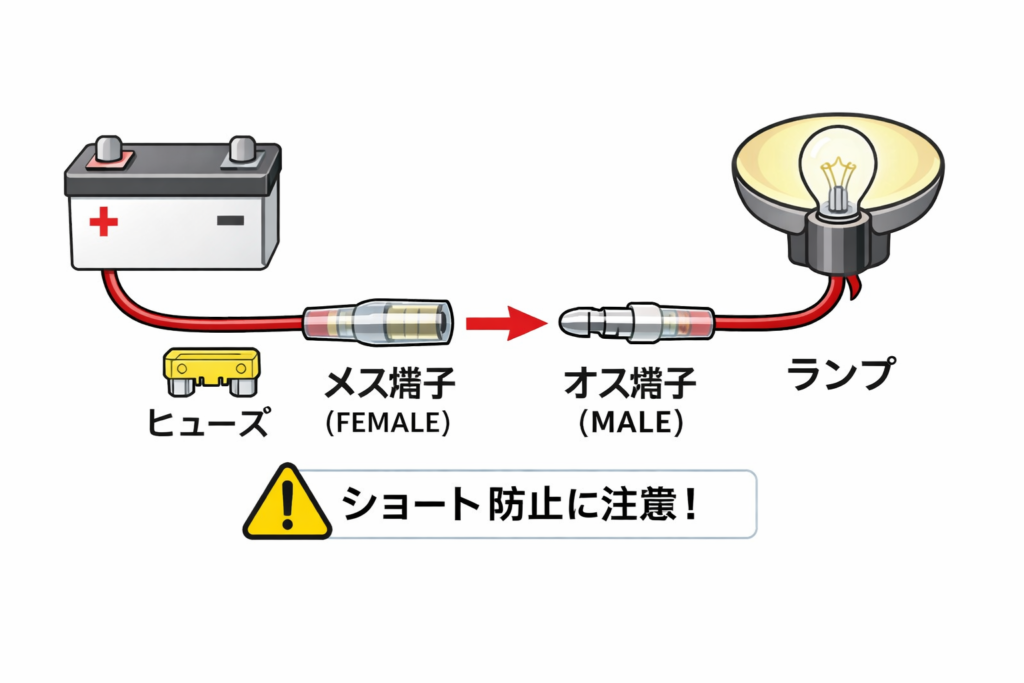
Use a FEMALE connector on the power (+) side
Use a MALE connector on the load/device side
This is a standard safety practice in automotive and motorcycle wiring.
Why is the power side female?
A male bullet connector has an exposed metal tip.
If it is connected to the power side and becomes unplugged, it can easily touch the vehicle body or frame and cause a short circuit.
A female connector hides the metal contact inside,
reducing the risk of accidental short circuits during installation or maintenance.
What about the negative (−) side?
The same idea applies, but in chassis-ground systems this rule is not always strictly followed.
When in doubt:
Always make the positive (+) side a female connector.
Typical wiring examples
- Battery positive → Female connector
- ACC power → Female connector
- After fuse → Female connector
- Device / lamp side → Male connector
Easy way to remember
“Power comes from the female side.”

コメント